



Biology & Behavior
Rhinos are some of the largest and most unique herbivores on the planet.
Their story dates back 50 million years, when their ancestors emerged shortly after the dinosaurs and long before mankind. Prehistoric rhinos also walked the Earth long before elephants, meaning they were once the largest land mammals on the planet.
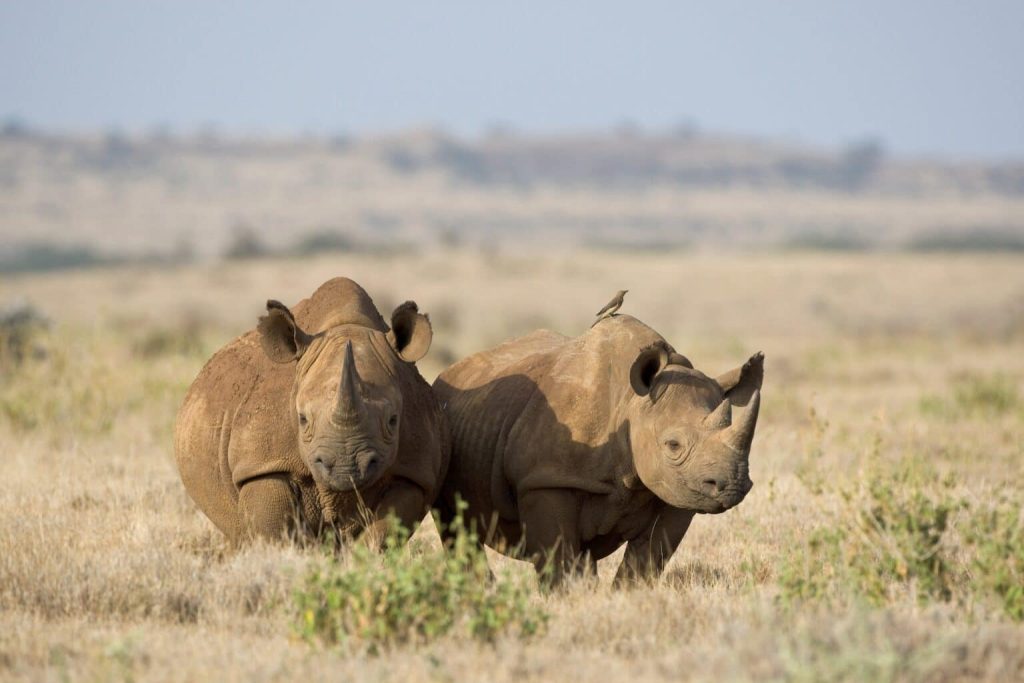
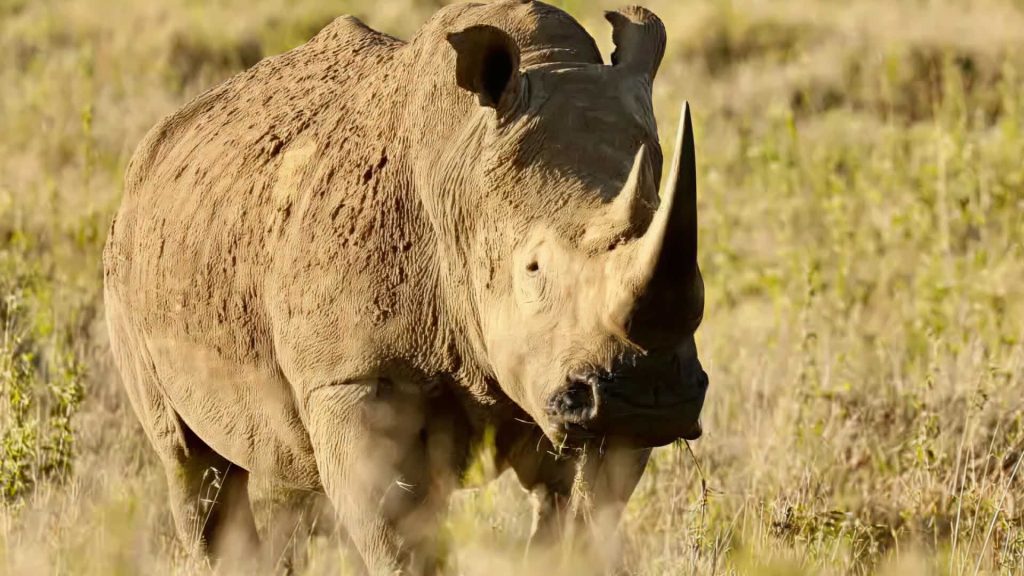
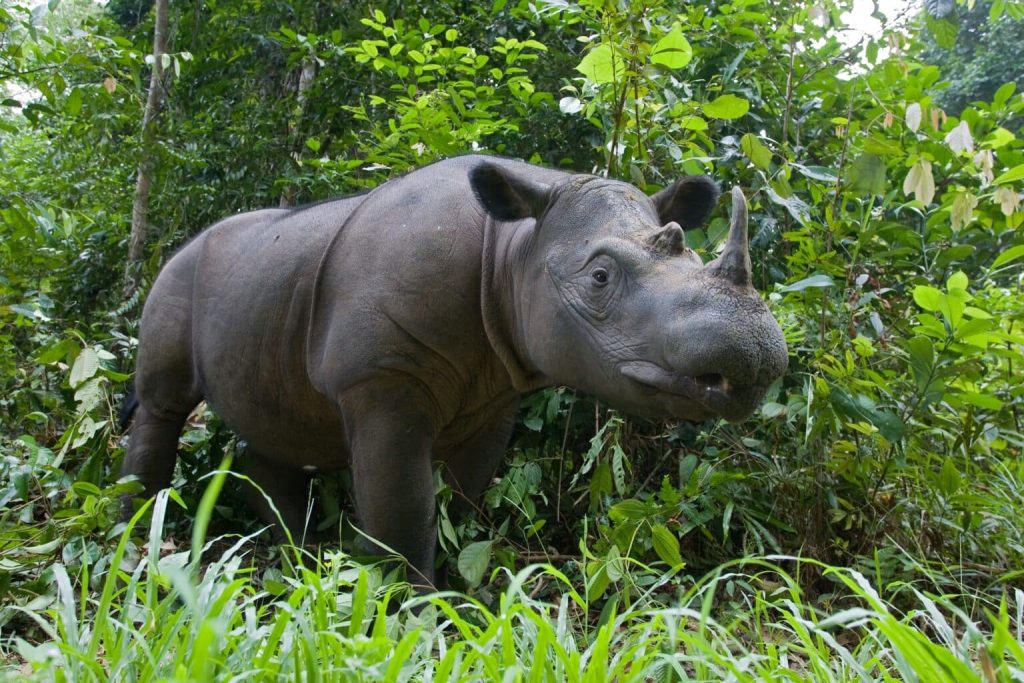
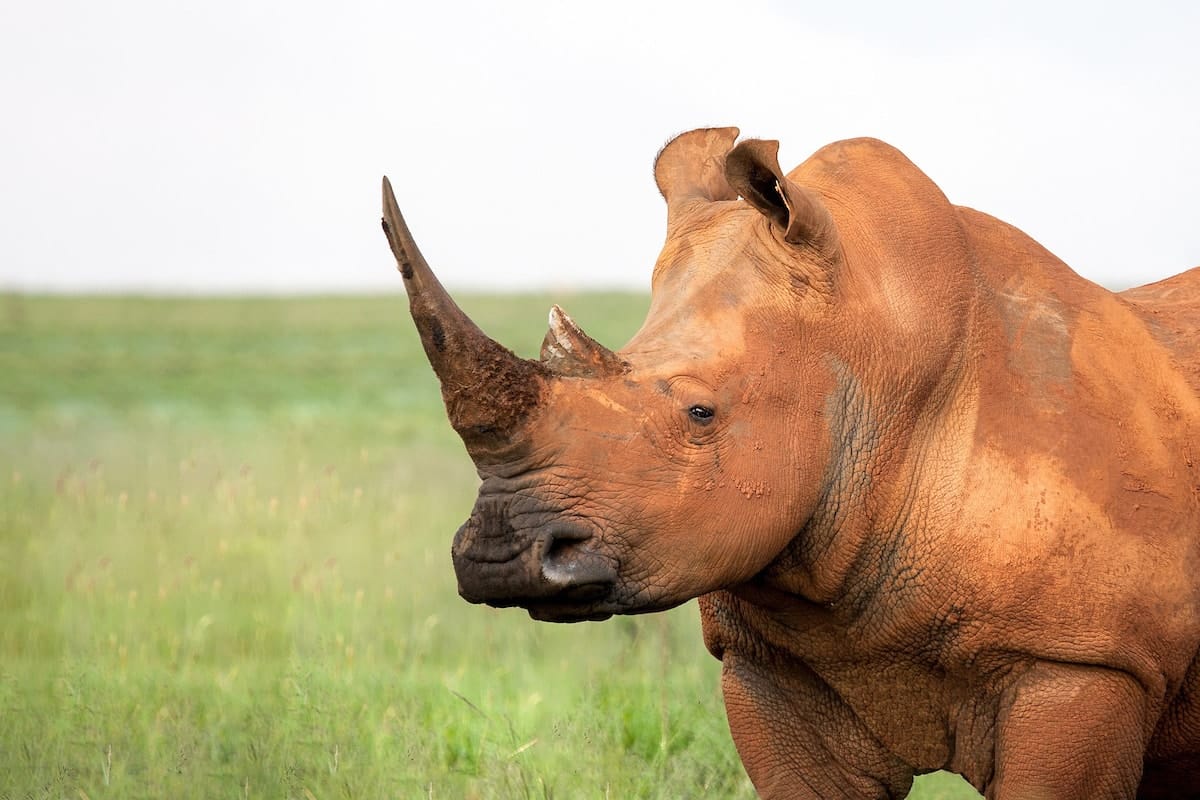
Today’s rhinos carry this proud pedigree, though they have lost the title of largest land mammal. There are five species living today: the black and white rhinos in Africa and the Javan, Sumatran, and greater one-horned rhinos in Asia. Despite definitive physical differences, all rhino species share the same distinguishing trait: horns growing from the tops of their snouts. White, black, and Sumatran rhinos all have two horns (one larger, one smaller), whereas Javan and greater one-horned rhinos each have a single horn. Rhino horns are used for defense, for establishing dominance, and for fighting rivals to win the right to mate. Horns are also used as tools to break branches and for contact during social encounters.
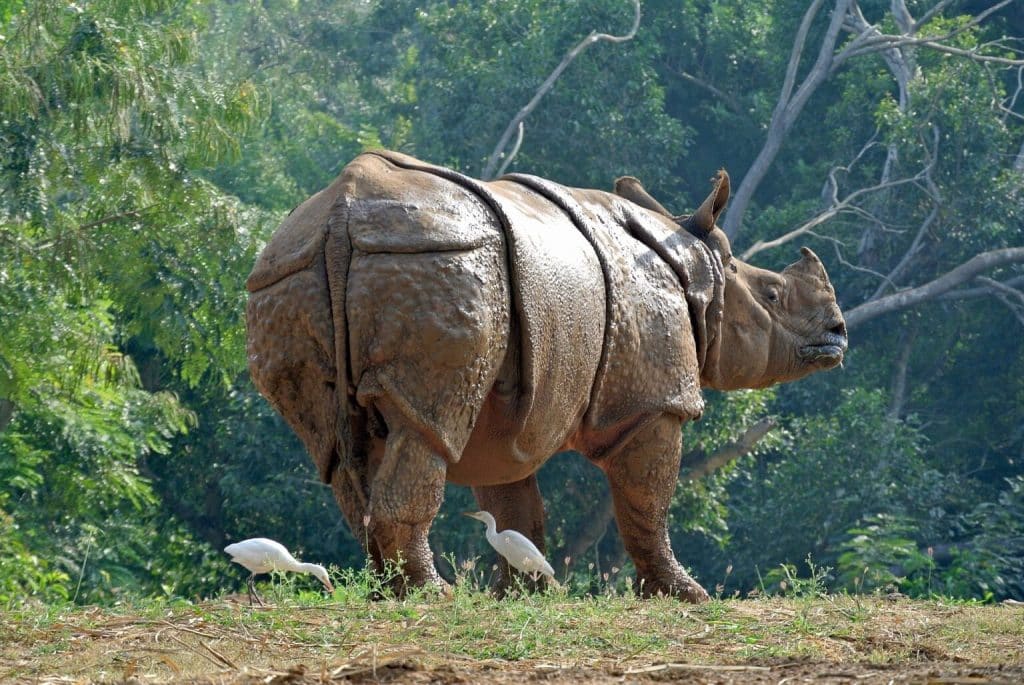
Rhinos are known for their immense size in addition to their horns. The largest species, the white rhino, can weigh over 5,500 pounds, or five times the weight of a polar bear. Each species of rhino has a formidable, sturdy body that is nearly devoid of hair, with the exception of the Sumatran rhino, which sometimes grows a coat of reddish-brown hair. To cool off and protect from insects, rhinos will often wallow in pools of mud or water to coat their bodies. African rhinos, like the white and black species, have smoother skin than their Asian cousins, which have more segmented, armor-like hides.
All rhinos are herbivores. Some graze on grasses across plains and forests, while others browse for vegetation, plucking leaves and fruit from tree branches and bushes. Rhinos that favor water will eat aquatic vegetation as well.
Female rhinos will reproduce every two to five years, and have only one calf per pregnancy, although twins have been documented on rare occasions. The mother will carry her baby for 15-18 months before giving birth, and will raise it for about three years before it goes off on its own. The lifespan of a rhino tends to be 35-45 years.
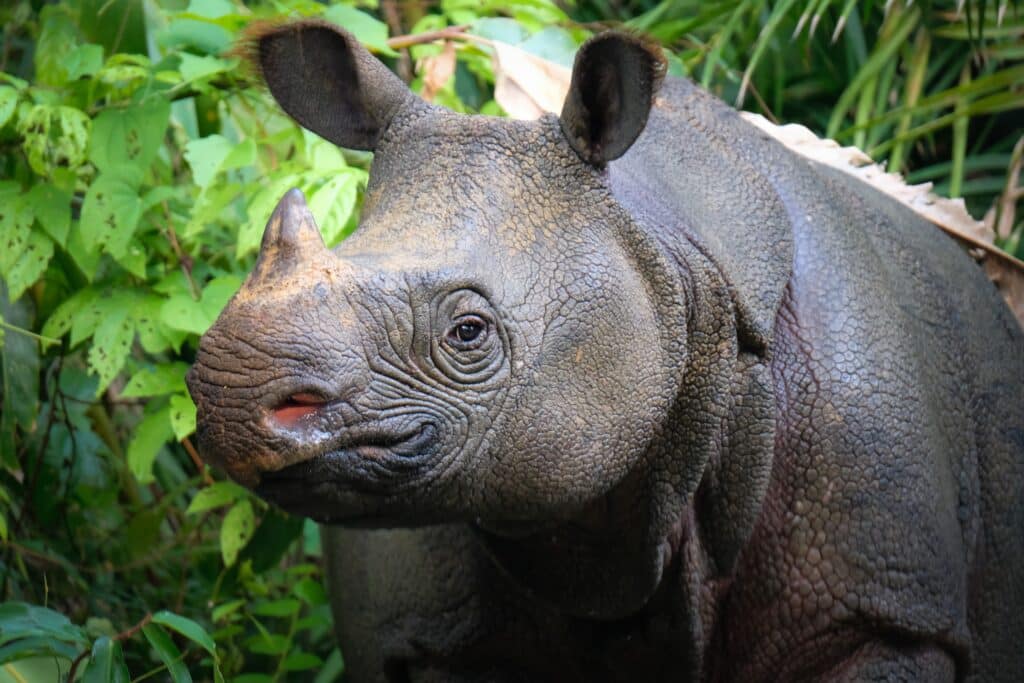
Most rhinos are relatively solitary animals, preferring to wander their habitat alone or with their young. This is especially true of Sumatran and Javan rhinos. Some species of rhino are more social than others, with white rhinos and greater one-horned rhinos regularly seen in herds. You will also see rhinos in the company of birds. Oxpeckers and other small birds will often perch on their backs, eating insects on their skin and alerting rhinos of any approaching threats. Rhinos delineate clear territories that they aggressively protect. They are sometimes documented in close proximity to each other, but this is often due to shrinking habitat that forces them to congregate closer than they would otherwise prefer. White rhinos are the most social rhino species, coming together in herds more often than others in order to keep each other safe.
Without rhinos, the landscapes they live in would be drastically altered. These ecosystems rely on rhinos to tend to the land, since rhinos selectively eat certain plants over others. By grazing on specific grasses and vegetation, rhinos shape what these environments look like for all of the wildlife living there and help boost biodiversity. Rhinos play a crucial role by sculpting their ecosystems, making them a keystone species that require our protection.
Distribution & Status
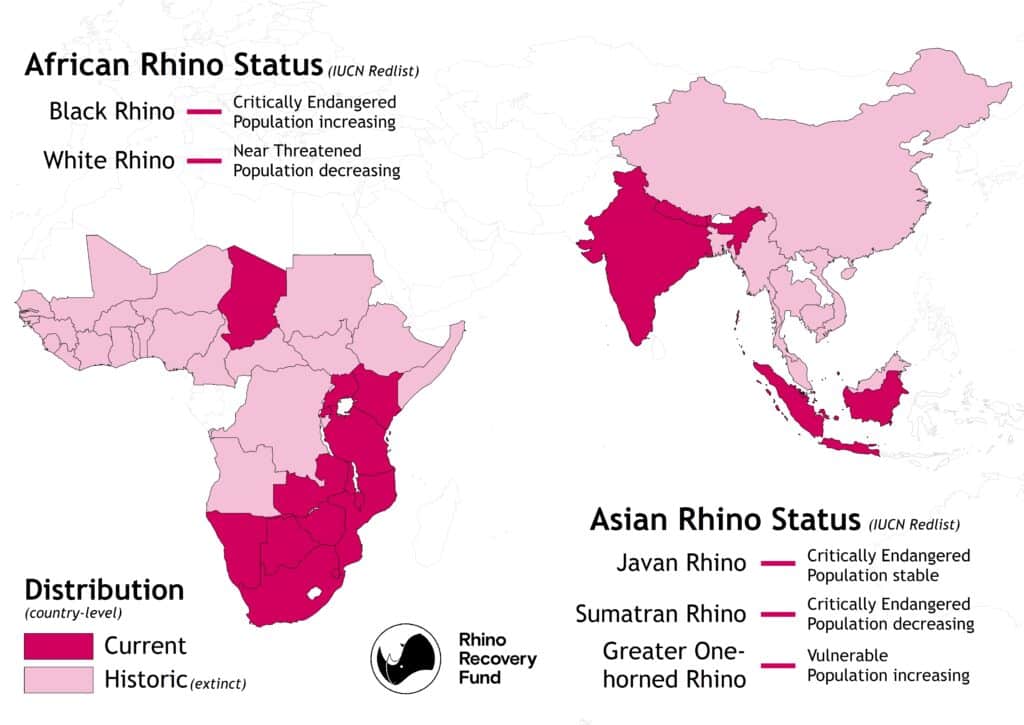
All five species of rhino are found only in parts of Africa and Asia. It is estimated that at the beginning of the 20th century, 500,000 rhinos roamed wild landscapes. Today, there are approximately 27,000 left due to poaching and habitat loss.
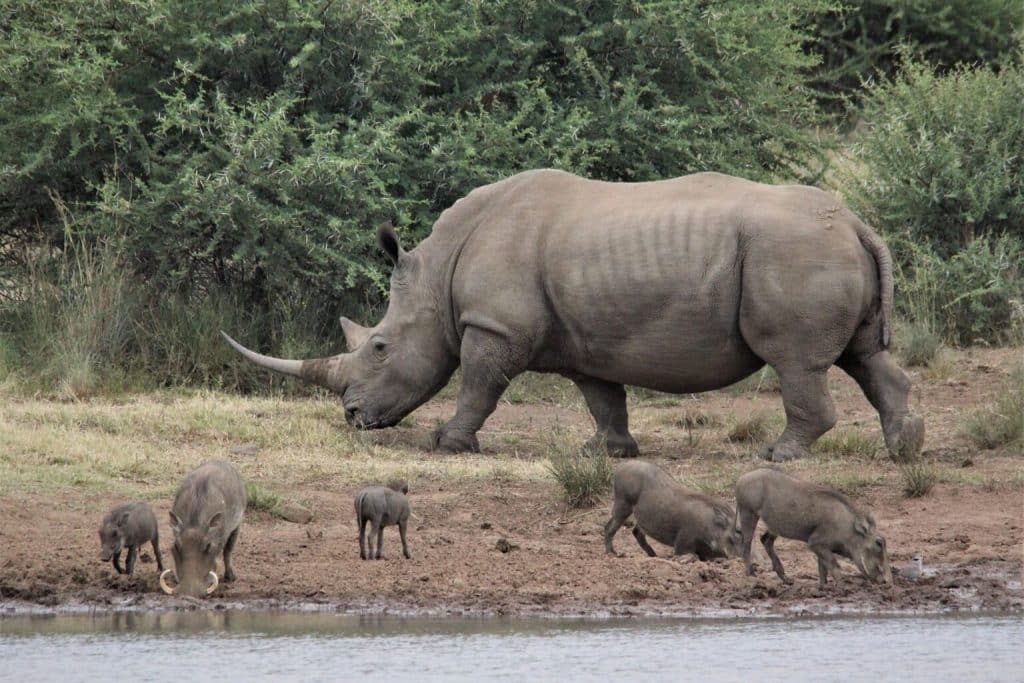
White and black rhinos are both found in African countries such as Botswana, Kenya, Namibia, Swaziland, South Africa, Zambia, and Zimbabwe. There are about 16,000 white rhinos living today, and around 6,300 black rhinos.
With Javan rhinos located solely in Java, and Sumatran rhinos found only in Sumatra and Borneo, these Asian rhinos face graver numbers. It is estimated that each species has fewer than 100 individuals left in the wild—about 50 Sumatran rhinos and 60 Javan rhinos. The Sumatran rhino is one of the oldest living mammals on Earth.
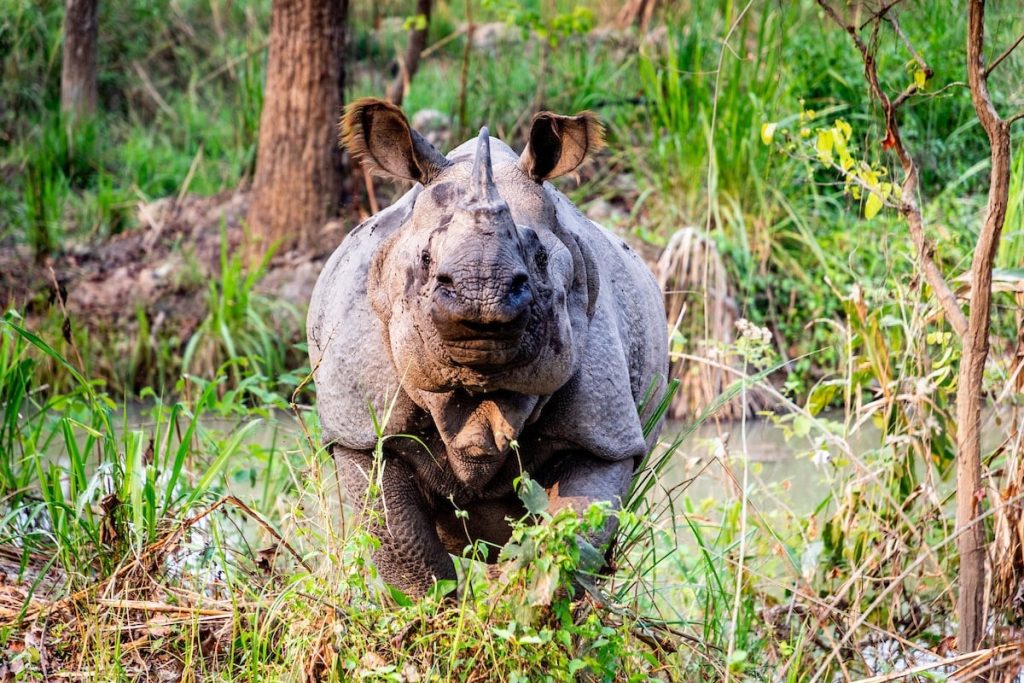
The greater one-horned rhino lives in India and Nepal, and their population currently numbers around 4,000 individuals. This is in large part thanks to government protections that have brought their numbers back up from under 200 in the last century.
Today, the black rhino, the Javan rhino, and the Sumatran rhino are all classified as Critically Endangered by the IUCN Red List. Greater one-horned rhinos are listed as Vulnerable and white rhinos are listed as Near Threatened.