


When villages in Northeast India began protecting pangolins, something unexpected happened. They found national recognition, and with that, a new regional identity.
In Manipur and Nagaland, communities along the Myanmar border had long been defined by what outsiders saw: remote, difficult to reach, caught between ethnic tensions and the shadow of the Golden Triangle’s notorious trafficking networks. The Golden Triangle, where Thailand, Myanmar, and Lao PDR converge, is a major corridor for wildlife, drugs, and human trafficking that shapes how the world views this entire region. These pressures have created an environment where wildlife can become another commodity in a larger economy of risk and scarcity. Poaching and trafficking are pushing endangered Chinese and Indian pangolins towards extinction in the region.
But local people never wanted those negative labels. They loved their villages near the Saramati mountains and Fakim Wildlife Sanctuary. They valued their Indigenous traditions and tight-knit communities. They wanted to be known for something better than proximity to a dangerous border. They just needed someone to see that possibility.
In 2023, Jose Louies and Monesh Singh Tomar from Wildlife Trust of India arrived with a vision that changed everything. The “Countering Pangolin Trafficking” project, supported by seed funding from WCN’s Pangolin Crisis Fund (PCF), offered these communities something precious: a chance to be recognized as protectors of wildlife.
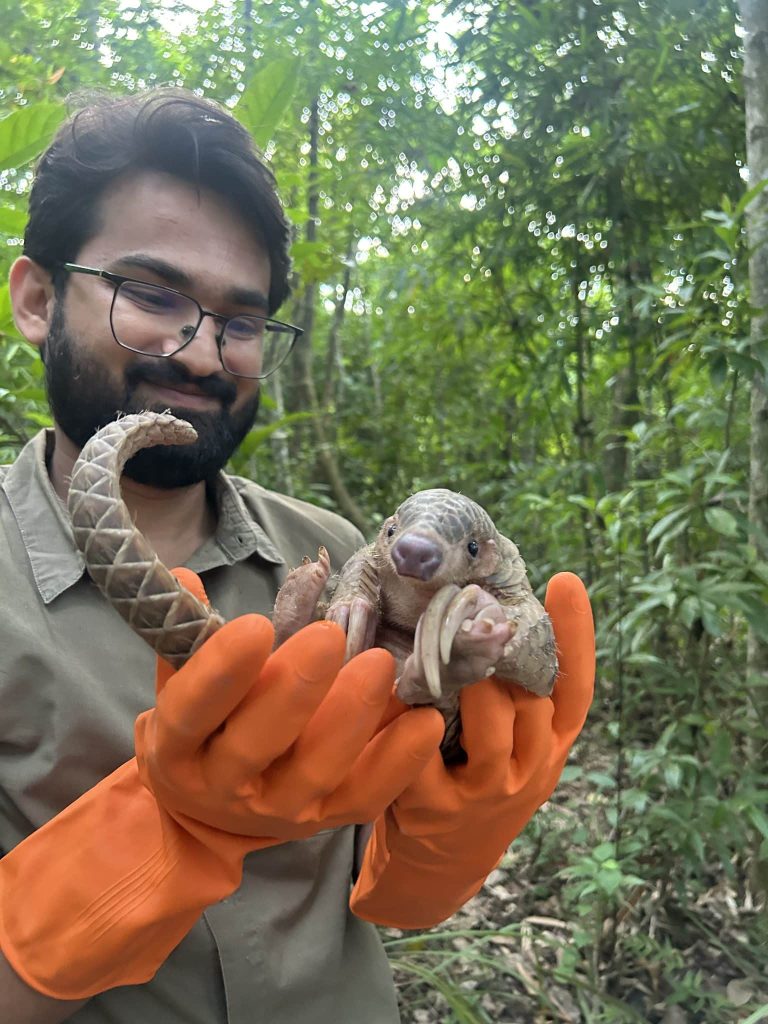
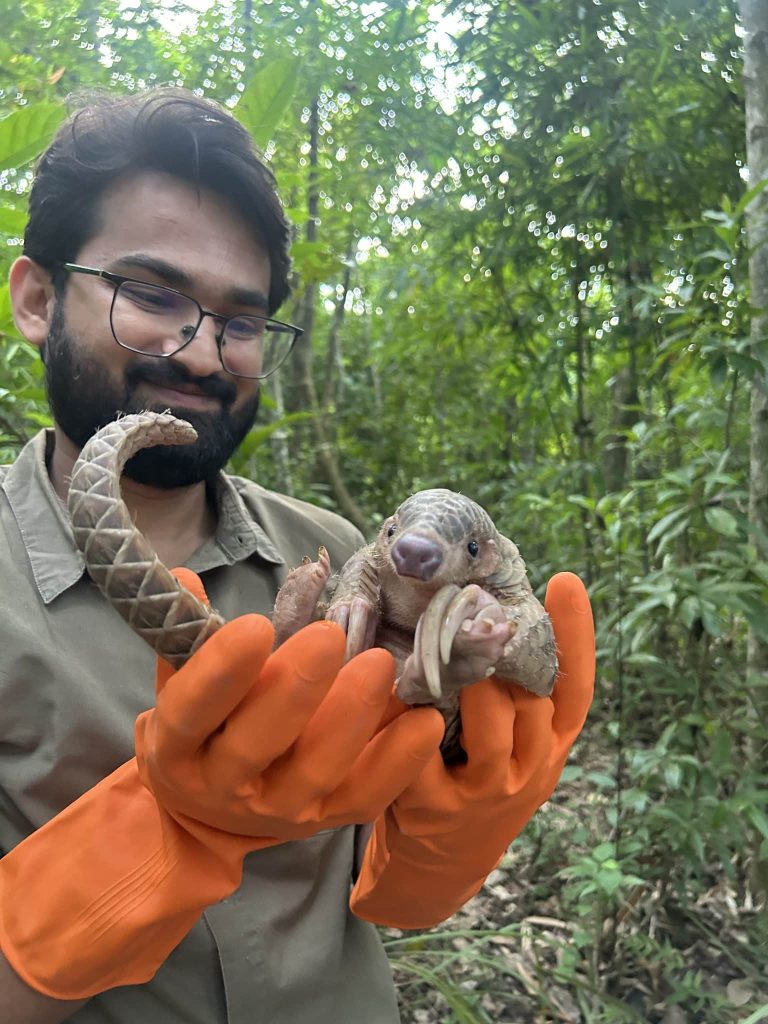
pangolin back into the wild.
The partnership was built on respect. Wildlife Trust of India worked through influential Indigenous leaders and the influential Catholic and Methodist churches who understood local culture. When ethnic violence erupted across Manipur, limiting even state law enforcement access, the team didn’t give up. The PCF’s flexible funding allowed them to adapt as needed.
That trust was repaid a hundredfold. In just one year, 252 Tangkhul village leaders signed binding agreements banning pangolin hunting, consumption, and trade. Another transformation was also unfolding in how communities were perceived by others. Villages dismissed as part of a “difficult region” became conservation pioneers, and council members became leaders of a movement that mattered beyond their borders.
By October 2025, the Puyenvong Council in Kiphire District, Nagaland, had unanimously voted to ban all pangolin hunting. Four village councils coordinated their own enforcement. This was their achievement, their story to tell.
This resolution was not driven by outside pressure, but by local leadership, awareness, and trust built through sustained engagement by the Wildlife Trust of India and Eco Warriors Nagaland. It marks a decisive shift: communities choosing to protect pangolins because they see them as part of their cultural and ecological heritage.
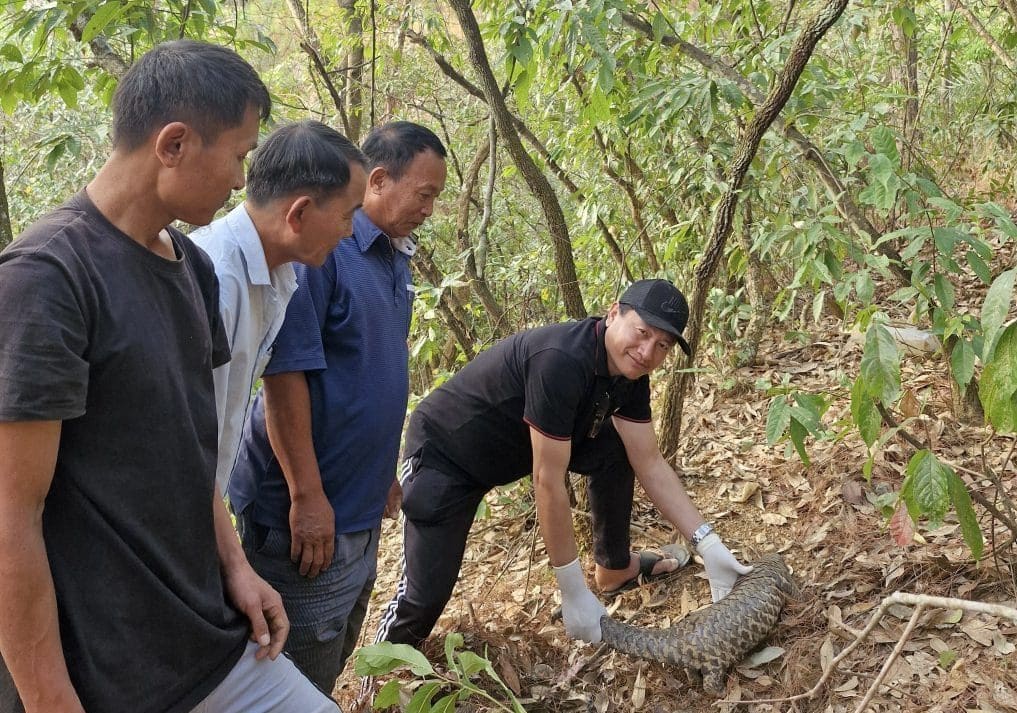
The work has expanded organically beyond pangolins to endangered hoolock gibbons and hornbills. Six pangolins were rescued and returned to the wild, and dozens of villages found pride in being sanctuaries rather than trafficking routes.
The Golden Triangle remains one of the world’s most challenging conservation frontiers where few NGOs dare operate. The PCF invests in the Wildlife Trust of India’s work there because saving pangolins requires approaches that change the conditions on the ground, working with communities to prevent trafficking and trade at the source. Now, right on the Golden Triangle’s doorstep, communities are proving their home isn’t defined by traffickers, it’s defined by protectors.