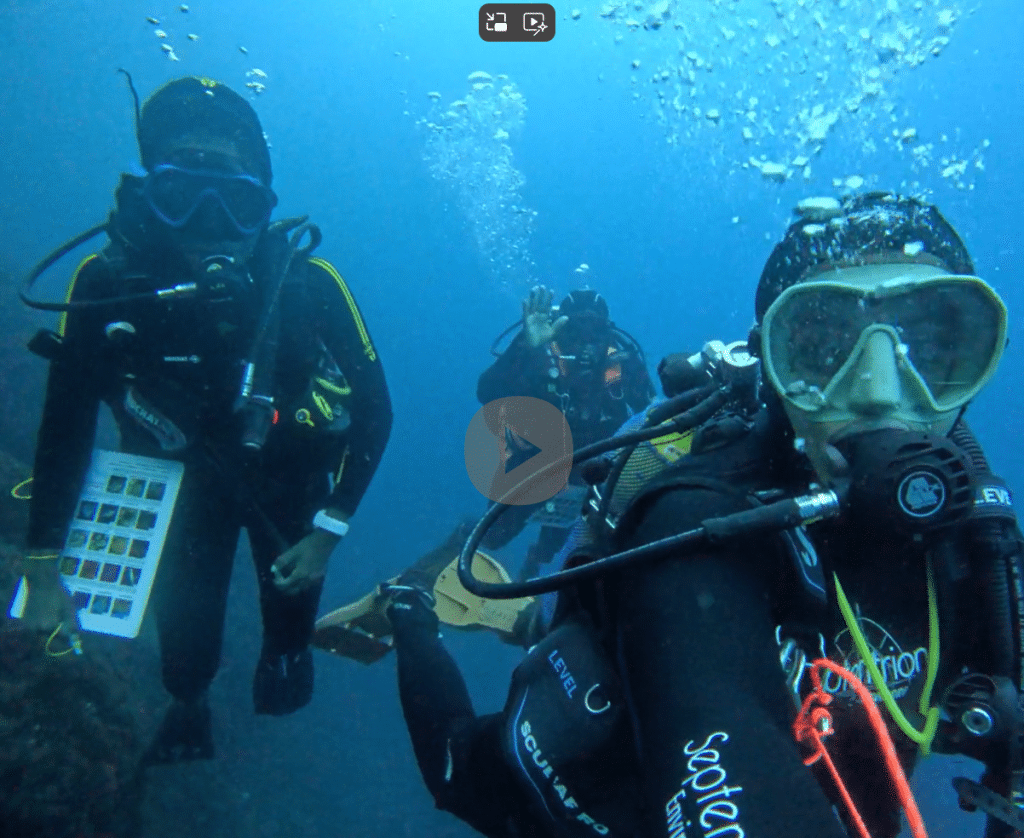
Beneath the coastal waters of Limbe, Cameroon, 24-year-old Cyndi Karel Ngnah steadies her diving gear as she drifts toward a reef shimmering with coral reds and purples. She can hardly believe this is her reality. Just two years ago, she couldn’t swim. Today, she is one of Cameroon’s first scientific divers, collecting data for the African Marine Conservation Organization (AMCO), a new WCN Conservation Partner working to safeguard the country’s aquatic wildlife. Cyndi’s presence underwater represents a breakthrough. Cultural taboos around the ocean and limited diving expertise have left underwater research to international NGOs, excluding local scientists and creating data gaps. AMCO’s push for local conservation leadership addresses these shortfalls and ensures the people closest to these waters lead its protection.
Cameroon’s coastline, connected to the Gulf of Guinea’s coral reef network, teems with wildlife in need of protection: critically endangered West African manatees, sharks and rays, sea turtles, reef fish, and diverse corals. Unsustainable fishing, coastal development, and climate change have degraded this ecosystem; however, without trained Cameroonian divers, the consequences—such as declining marine wildlife populations—have not been adequately documented. Through Cyndi’s work, AMCO is building the scientific foundation that has been absent for decades. What she captures beneath the waves transforms into action above, informing policy and AMCO’s programs.
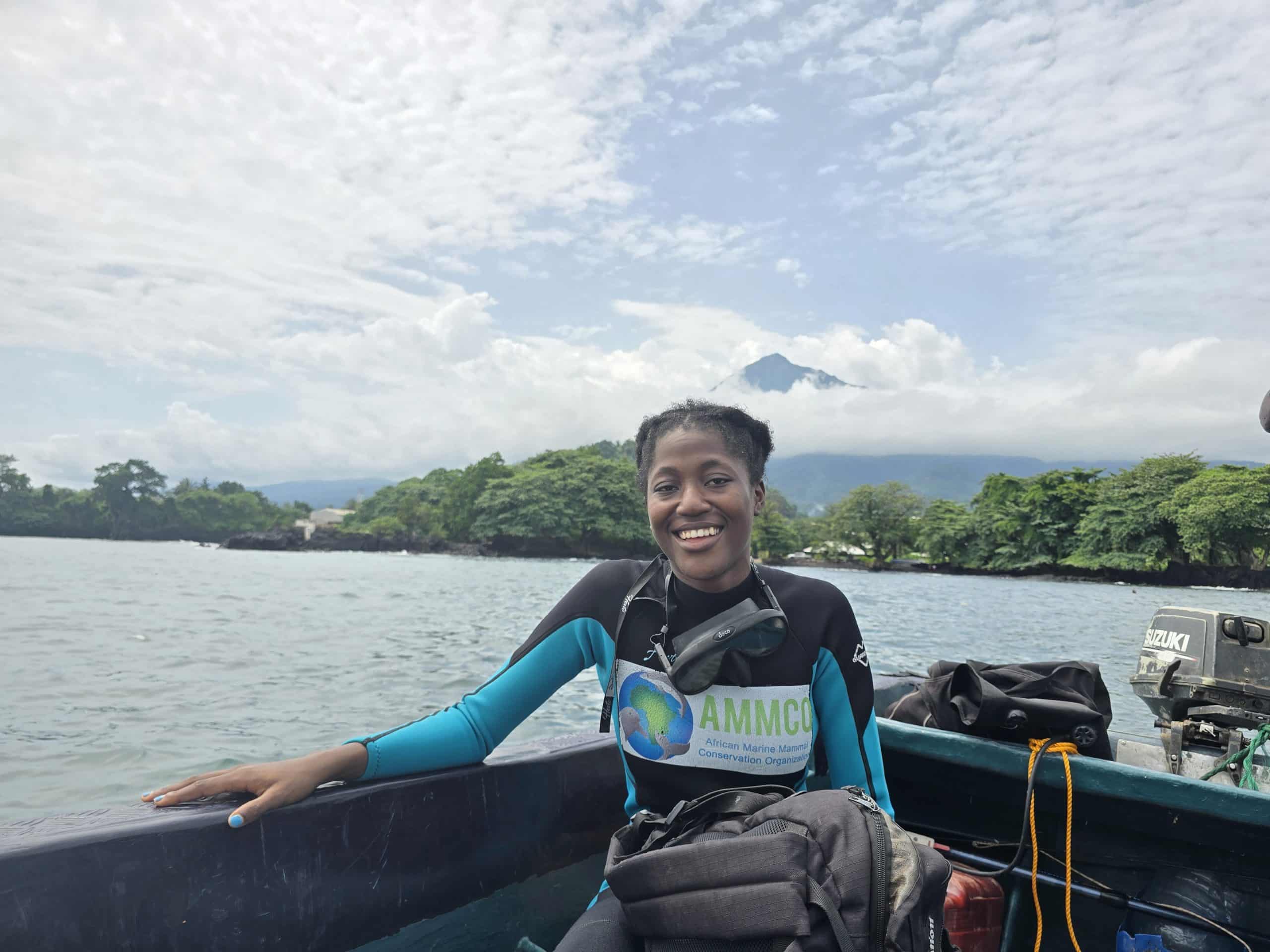
At AMCO, Cyndi has worked to protect the ocean for years, but she never dared explore it herself. For many Cameroonians, local myths, like those of the water spirit Mami Wata dragging people beneath the waves, have cast the ocean as dangerous, fostering detachment rather than stewardship—even for the fishing communities that depend on the ocean for food and income. While Cyndi’s curiosity and determination eventually pushed her past these fears, helping the broader community develop similar care for aquatic life remains a challenge.
As AMCO’s Head of Environmental Education, Cyndi leads programs on sustainable fishing techniques and promotes safe release methods for sharks and rays. She also creates educational cartoons to spark curiosity about marine life among children. By becoming a diver, Cyndi now draws directly from her underwater experiences to ground her outreach—integrating her photos into educational materials and mapping locations for fishers to avoid due to an endangered species’ presence.
Cyndi is part of a local network of scientific leadership that will ensure Cameroon’s marine ecosystems are studied and protected by Cameroonians themselves. Her diving expertise has become the cornerstone of AMCO’s most ambitious project yet—the country’s first scientific and recreational marine center, set to open in 2026. The facility will train and inspire the next generation of Cameroonian conservationists. It will be a place where communities gather, learn, and see the ocean as a source of possibility.
As Cyndi continues her dive, the reef initially bursts with tropical fish, yet only a few meters further, bleached coral lies like bones picked clean. She photographs the stark contrast caused by rising ocean temperatures before ascending. At the surface, Cyndi becomes the link between two worlds—bringing the ocean’s hidden life into reach for her community. “People gather on the shore when I dive,” she explains. “A new world opens when they see me.”