
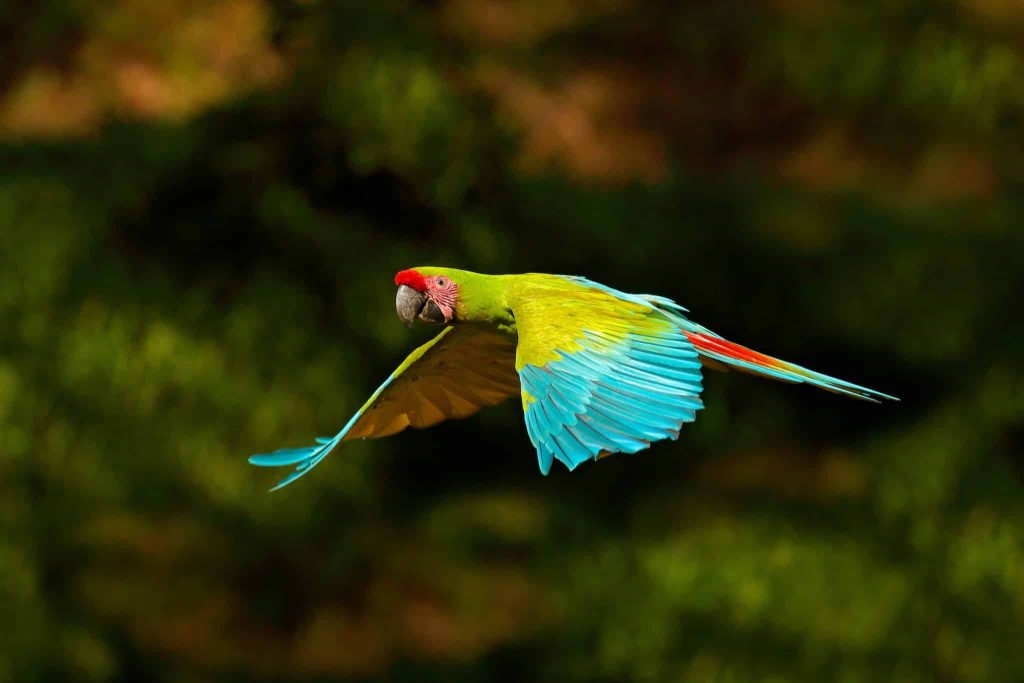
At dawn, morning mist settles over rows of young trees. In the outdoor nursery operated by the Macaw Recovery Network (MRN) in Costa Rica, ranger María Elena Munguia Jimenez leans over a mountain almond sapling, gently pouring water around its slender trunk. More than 4,000 young trees stand here, each part of MRN’s effort to restore habitat for critically endangered great green macaws. But knowing which trees to plant, and where, required first learning to listen.
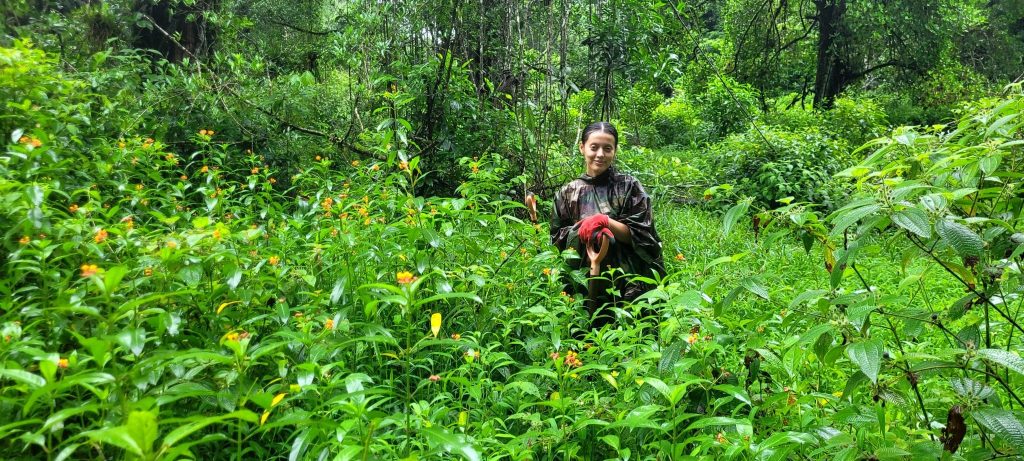
Maria Elena in the field at the Sarapiquí Rainforest Reserve.
Across the macaws’ vast range spanning much of Costa Rica, MRN has placed recording devices that capture macaw calls over wide areas. This acoustic monitoring program is revealing where the birds travel and congregate, and has sparked an important new question: why were macaws absent from areas that appeared perfectly suitable for them? This question led the team to investigate food availability—specifically, whether seasonal gaps in fruiting might force macaws to migrate through riskier, less protected landscapes. MRN began pairing audio data with detailed information about food trees: their locations and fruiting schedules. In a recent pilot study, they used a drone to map tree species directly from the forest canopy, creating a potential bridge between macaw movements and seasonal food availability. These insights can guide which plants María Elena and the rest of the MRN team plant as part of their forest restoration efforts.
I’m inspired to be part of a team that believes in a love for life and transforms it into restoration every day. To plant without the certainty of ever seeing the forest is the purest act of that love.
MRN’s restoration work is addressing a major threat to macaws. Decades of deforestation, driven by cattle ranching and export crops, have carved the macaw’s forests into isolated patches along the Sarapiquí River and throughout northeastern Costa Rica. This loss of key trees has reduced food sources, nesting sites, and safe movement corridors for all wildlife species, which further weakens the great green macaw’s habitat in a cascading cycle. Such pressures have pushed the great green macaw to Critically Endangered status, making recovery a challenge that extends beyond protecting what remains—it requires actively restoring the diversity of trees and animals that macaws need to thrive.
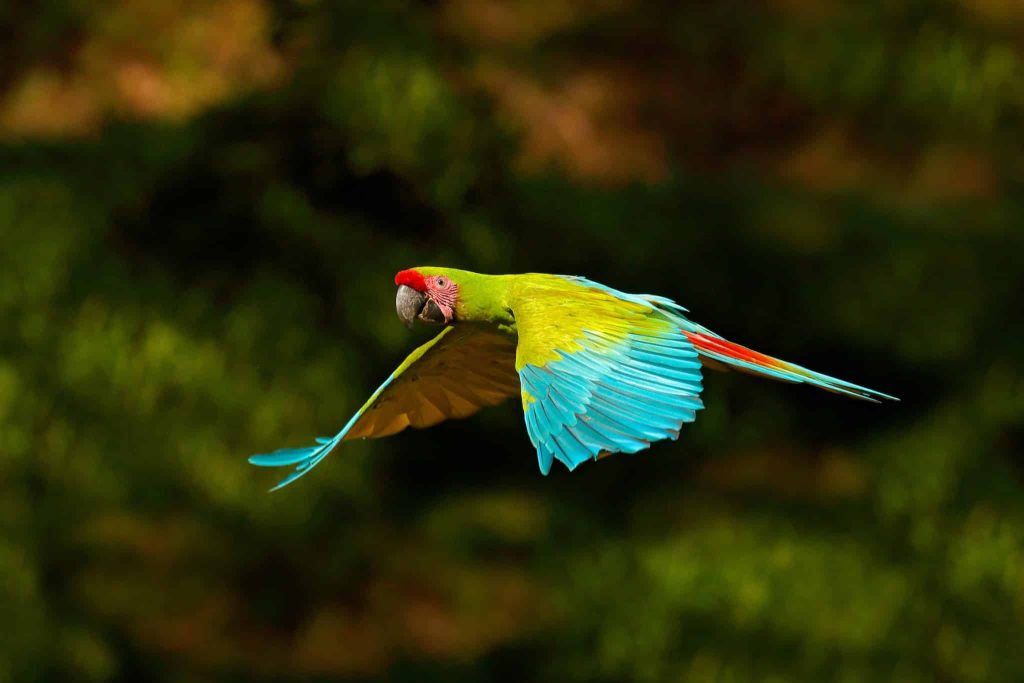
MRN addresses these challenges by monitoring wild macaw populations while partnering with local communities to protect forest fragments and promote coexistence with wildlife. Their reforestation efforts began in earnest in 2021 with a nursery supporting restoration in degraded areas. Recently, they purchased the Sarapiquí Rainforest Reserve, one of the few remaining strongholds for the great green macaws. But even here, habitat fragmentation remains visible: a degraded stretch of land divides the reserve in two. The seedlings grown under María Elena’s care will be planted to reconnect this landscape, improving ecological continuity and increasing the availability of food and shelter for macaws and other wildlife.
Informed by data from acoustic monitoring, MRN is replanting species like mountain almonds that are essential to the macaws’ diet, helping forests regain the diversity that once supported stable macaw populations. It’s a model that offers a scalable blueprint for restoring function to fragmented forests.
As the sun climbs higher, María Elena pauses to look at the sapling before her. She imagines the day its branches will sway with ripe fruit and the emerald-crowned head of a great green macaw will appear among its leaves.