



Biology & Behavior
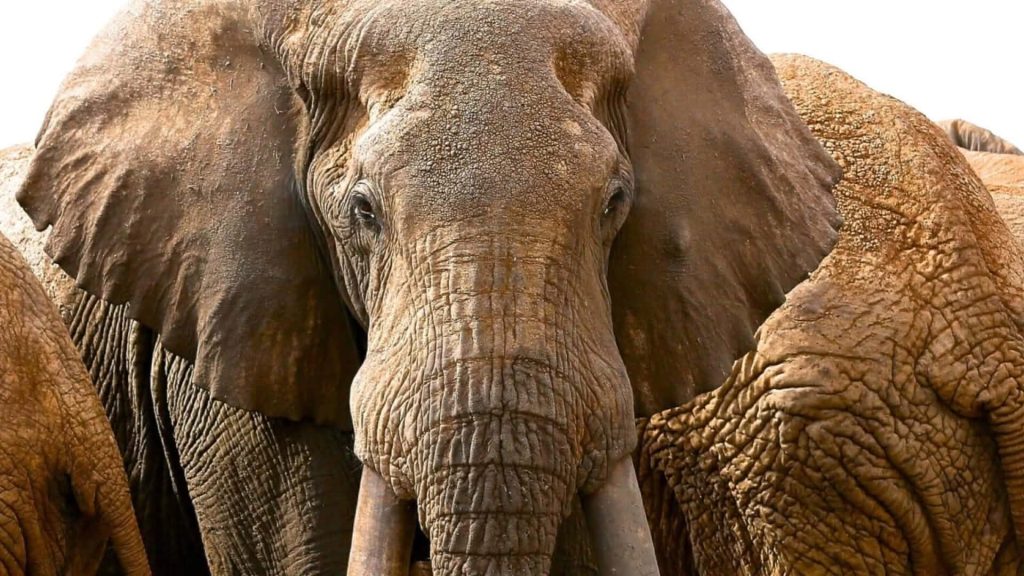
Elephants are social and intelligent.
They live as long as humans do and have many things in common with us. They live in socially complex family units. They take care of their young like we do, and nurture and reassure them into their teens. They have close family ties and mourn their dead. When one spends time watching elephants, it becomes undeniable that they have an awe-striking intelligence.
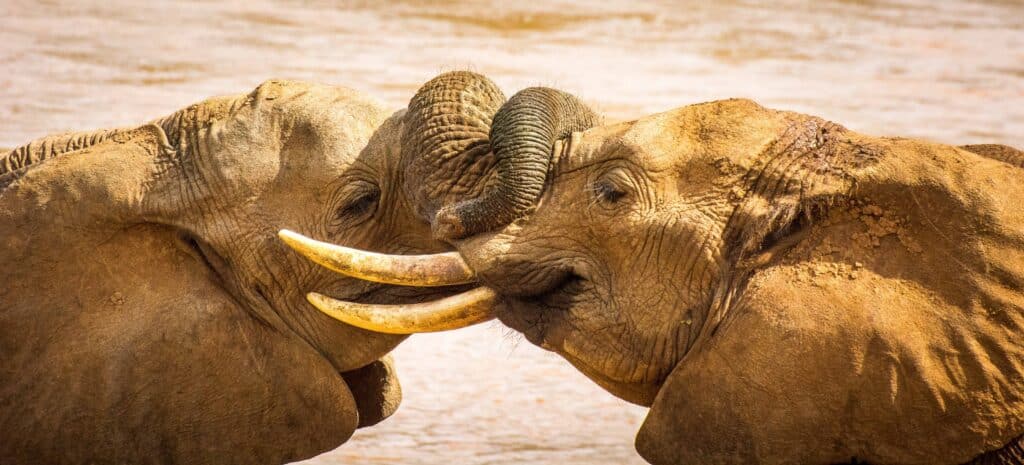
Indeed, the African elephant is long-lived, sometimes surviving to 60 to 70 years.
Scientists (like those at Save the Elephants) know more about elephants than almost any other animal, yet are only just starting to understand their world. Imagine how much more there is to discover, and what elephants have to teach us about life.
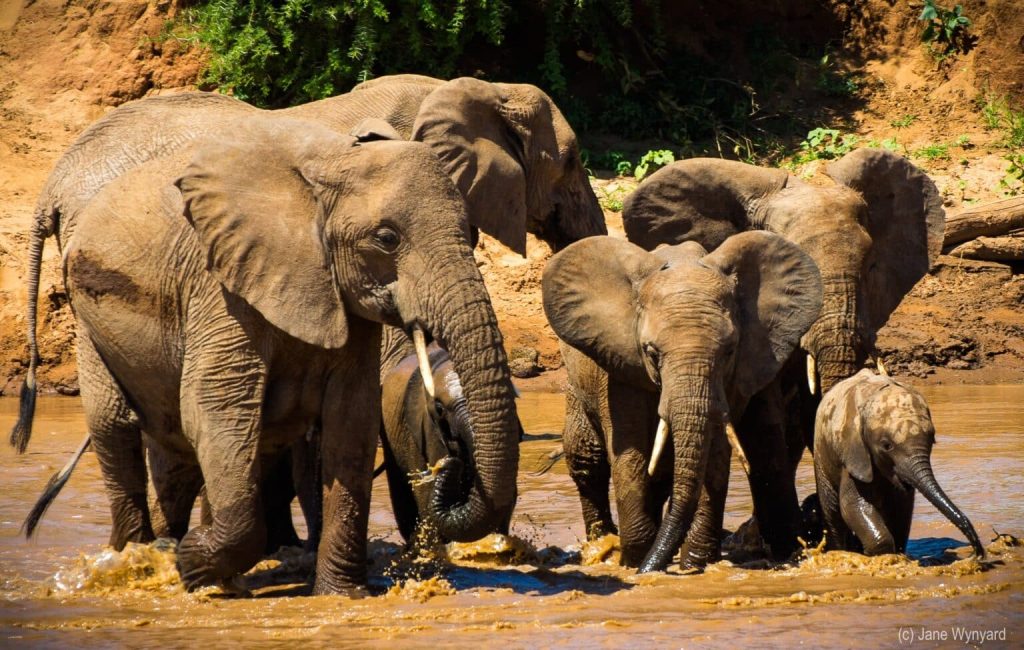
Elephants live in family groups. An older female (the matriarch) leads the family and uses her old age and experience to protect the herd and show it to food and water.
Females stay with the same family all their lives, while the males only remain with the herd until they are 12-13 years old. They then join a group of other males called a bachelor herd or live alone.
Elephants are natural gardeners, helping to disperse seeds and create spaces for other plant species to grow, and sculptors of Africa’s most iconic landscapes. They are also culturally important and a cornerstone of the $34 billion tourism industry across Africa.
Distribution & Status
In March 2021, following new research into the genetics of elephant populations, African elephants were reclassified by the International Union for Conservation of Nature (IUCN) as two distinct species: African forest elephant (Loxodonta cyclotis) and African savanna elephant (Loxodonta africana). Read more about forest elephants.
African elephants were previously listed in the IUCN Red List of Endangered Species as Vulnerable. The African forest elephant was reassessed in March 2021 as Critically Endangered, following decades of population decline due to poaching for ivory and loss of habitat. The African savanna elephant was reassessed as Endangered.
African elephant numbers have plummeted from 1.2 million in the 1970’s to only around 500,000 alive today. The recently released IUCN African Forest Elephant Status Report (2024) states that the entire forest elephant population, including estimates and guesses, may number 145,050 animals. A status report for African savanna elephants is expected to be finalised soon.
Elephant poaching across much of Africa has reduced in recent years. In 2014 there were 26 Elephant Crisis Fund (ECF) sites across Africa where so many elephants were being killed by poachers that their continued survival was uncertain. Today, poaching in many of these sites has been reduced to a point that it does not pose a current significant threat. However, elephants are far from being safe. Despite the best efforts of our partners, poaching remains an issue in some areas, and other threats are escalating, including human-elephant conflict and loss and degradation of elephant habitat.
If elephant conservation is not prioritised, we risk losing this iconic and critical architect species from ecosystems across Africa. We need to preserve intact elephant habitat and intact elephant communities for both the health and benefit of the planet and the health and well-being of this largest of all sentient, social mammals left on Earth today.
Read about the projects funded by ECF to tackle these challenges.