

Biology & Behavior
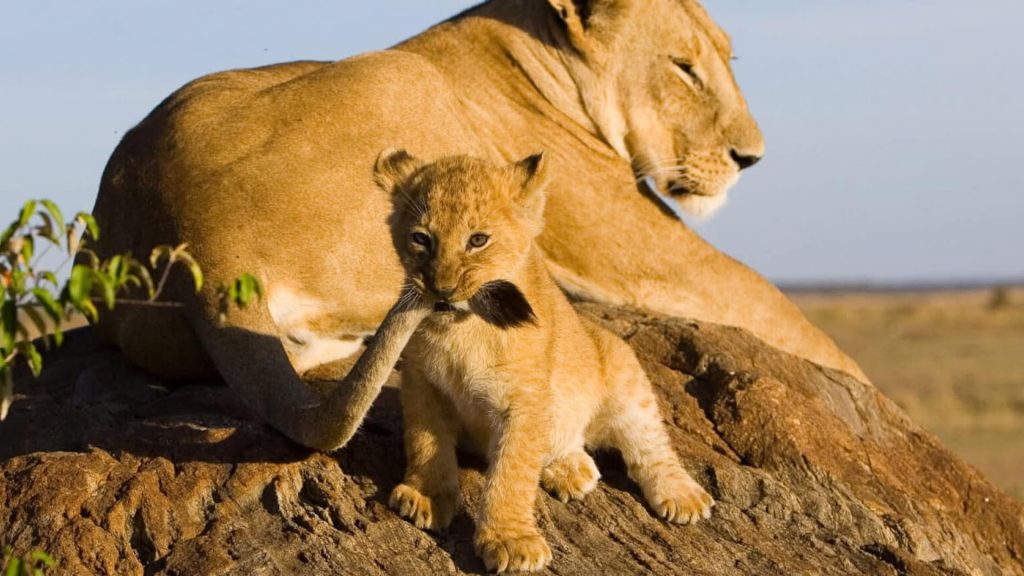
Lions are Africa’s largest carnivore.
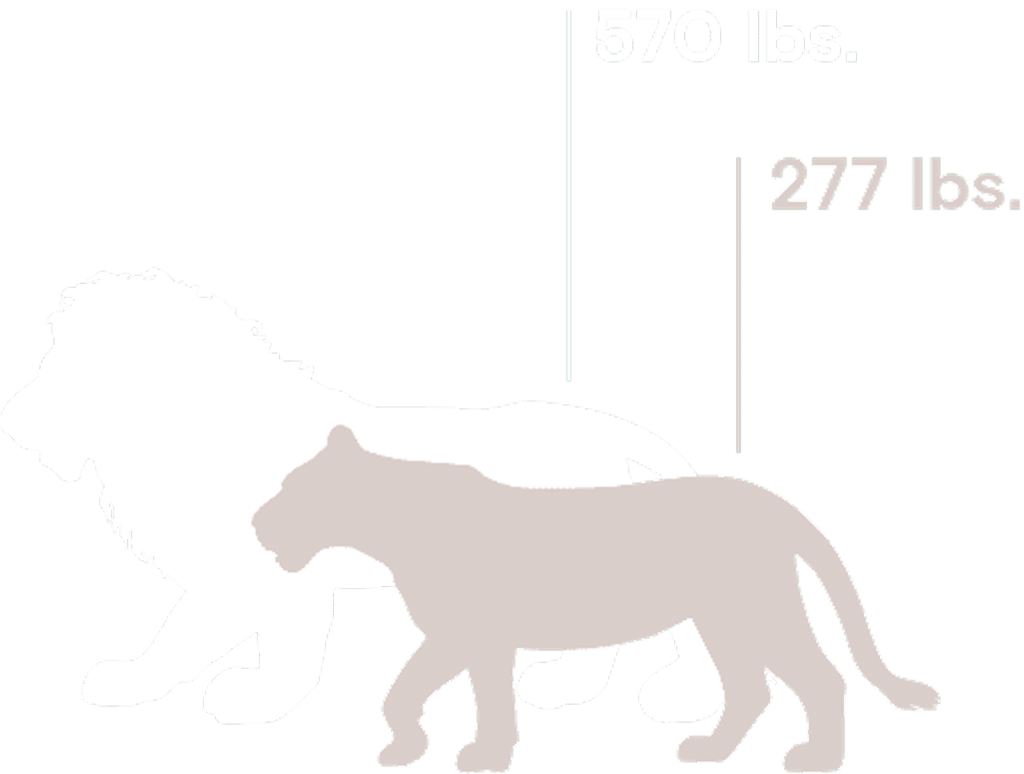
The males of this majestic species weigh up to 570 lbs. and females up to 277 lbs.
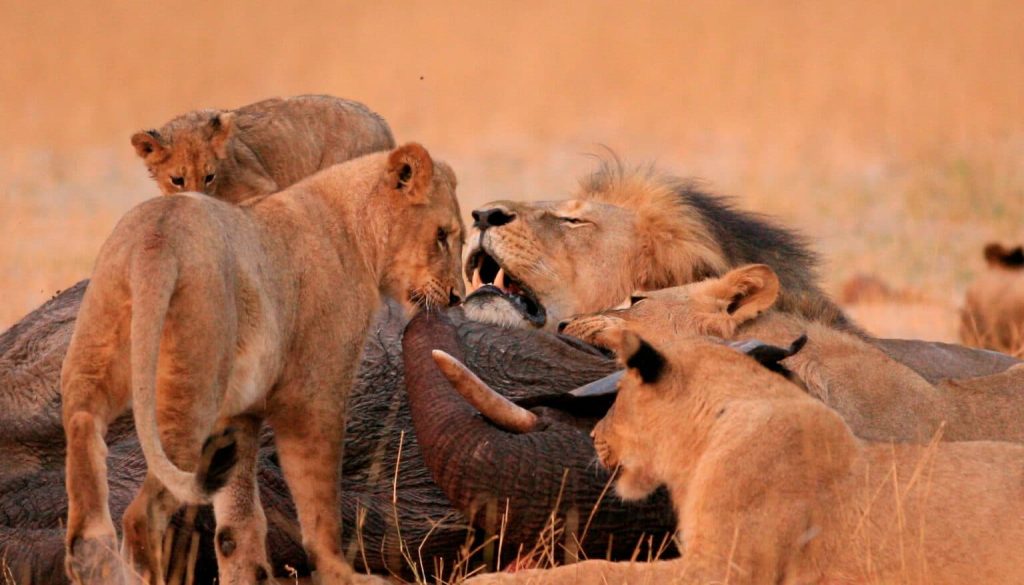
Lions form prides that consist of groups of adult females, smaller numbers of males, sub-adults, and cubs.
The adult females in a pride are typically all related, though unrelated sub-adults are sometimes allowed to join.
Male cubs leave the pride and stay together as nomads until they are mature and manage to take over a pride. These nomadic groups sometimes accept unrelated males in order to boost their numbers and their prospects of taking over a pride.
Lions frequently hunt cooperatively, and tackle a wide range of prey, from rodents to large herbivores.
Distribution & Status
Lions once roamed from Europe to the southern tip of Africa, and from West Africa all the way to India. Today, that distribution has been dramatically reduced to just 7% of their historic range. Populations are now restricted to pockets of sub-Saharan Africa (and a relict small population in northern India).
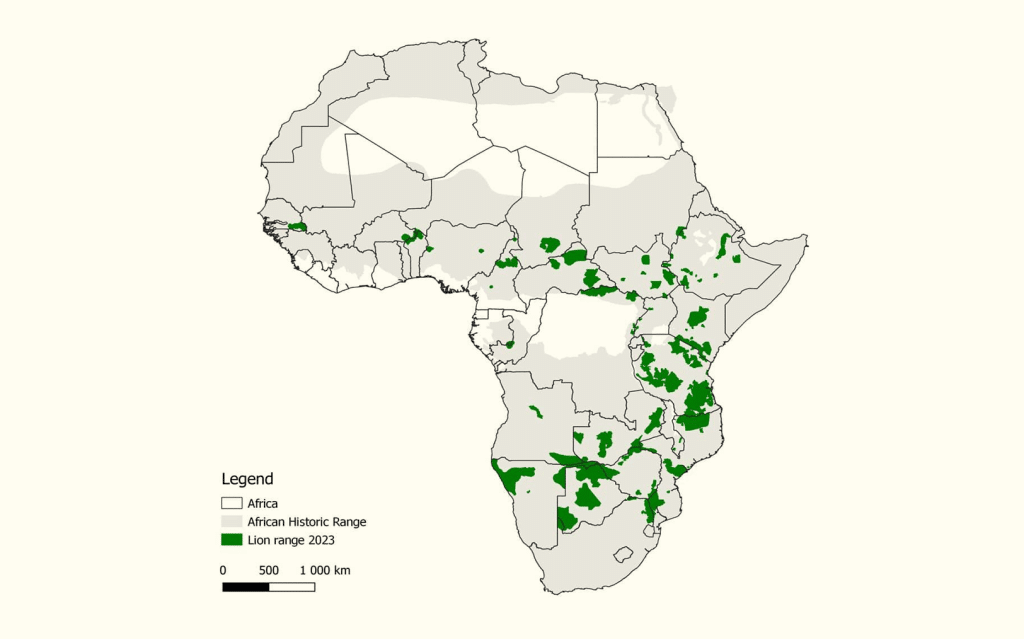
Within Africa, the species has suffered a steep decline in both range and numbers. One century ago there were perhaps 200,000 lions, today there are likely 23,000. In the last quarter century, lion numbers have declined by half.
Southern and East African lions are listed as being Vulnerable according to the IUCN Red List, though the northern sub-species is considered to be Endangered. The West African clade of the northern lion is considered to be Critically Endangered.
The LRF is the major funder of the African lion database. In addition, with generous support from the Ayers Wild Cat Conservation Trust, the LRF has been supporting robust lion surveys in as many parts of lion range as possible – to test the impact of our investments and to allow for adaptive management and conservation.