
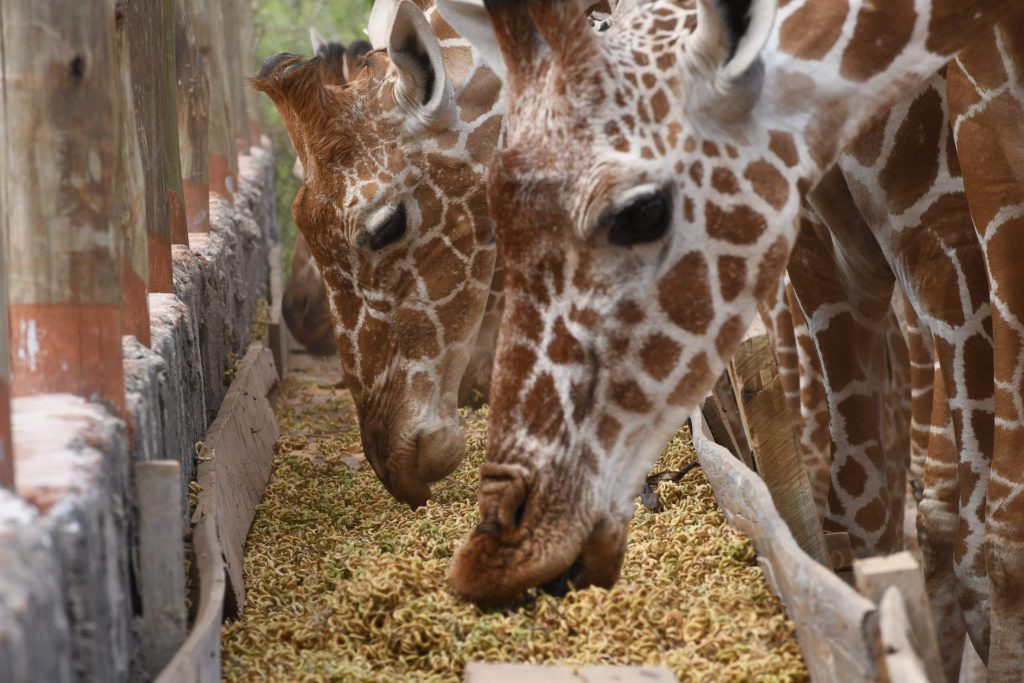
In Kenya, a farmer watches dawn spill over a mango grove, where yellow flowers will soon yield fruit—the source of his future income. Scanning the treeline, the farmer spots two towering giraffes plucking flowers from branches. Crop raids by giraffes are not uncommon in Kenya, causing financial loss and sometimes lethal retaliation. As head of Human-Wildlife Conflict at the Hirola Conservation Program (HCP), Mohamed Hussein has witnessed frustrated farmers setting snares that catch giraffes around the neck, strangling them until they collapse. That’s why he spends his days speaking with farmers about a toolkit designed to keep giraffes and livelihoods safe.
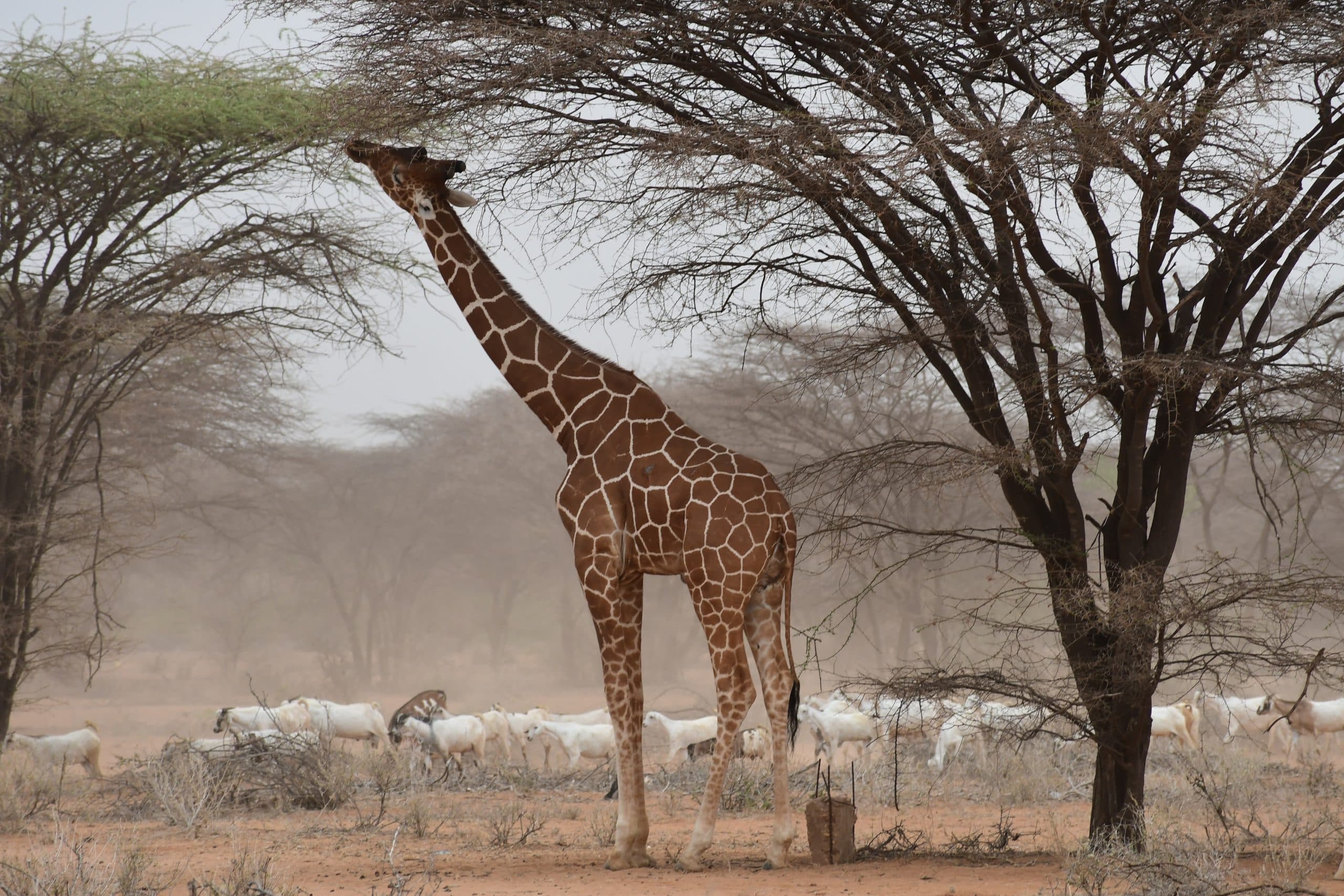
In Garissa County, Kenya, human-wildlife conflict has intensified as expanding farmland and settlements fragment habitats. Wildlife species dependent on vast territories for foraging now encounter sudden barriers along ancient routes. Farmlands near Kenya’s scarce water sources are flashpoints as animals damage crops while seeking water. HCP, a new WCN Conservation Partner, has spent over a decade addressing these challenges. By restoring grasslands and employing herders as scouts, HCP fosters coexistence between people and wildlife to sustain a healthy landscape.
While HCP primarily protects the Critically Endangered hirola antelope, they’ve begun addressing farmer retaliation against the Endangered reticulated giraffe, a species that heavily influences Garissa’s landscape. Though giraffes are picky eaters, mango and guava groves are similar to the acacias they prefer—trees largely eliminated from Garissa due to development. Even a few giraffes can eat enough foliage in one night to significantly harm a farmer’s livelihood. Tracking rising tensions over several years, HCP compiled a conceptual “toolkit” of non-lethal deterrents—like solar lamps, noisemakers, and beehive fences—that they could introduce to farmers. However, they lacked reliable data to pinpoint priority conflict zones—information essential to invest in and deploy deterrents wisely.
That began to change in early 2025, when rapid development near water sources sparked a surge in conflict reports. Rangers increasingly radioed about giraffe intrusions, and farmers brought their grievances directly to HCP’s office. With this influx of data, Mohamed could map hotspots and roll out HCP’s giraffe coexistence toolkit.
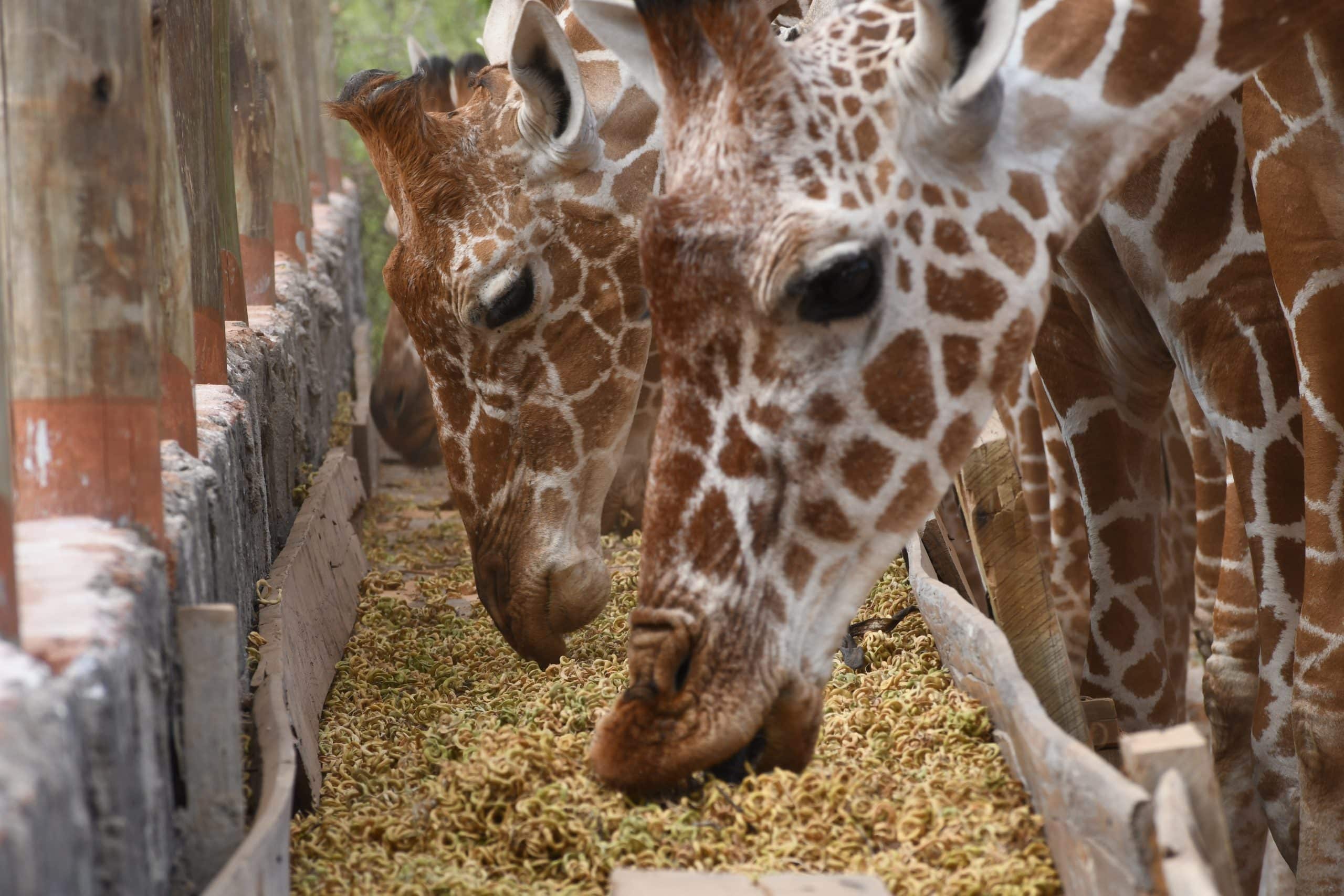
By summer 2025, Mohamed began visiting farmers, outlining the toolkit’s options. Once farmers chose methods best suited for their crops, HCP would supply the devices, and Mohamed helped install them before setting up camera traps to monitor each device. Overall, fifty farms adopted deterrents, half using multiple barriers. Early results have been promising: Farms with at least two deterrents reported far fewer giraffe visits, and no participating farmers have killed giraffes in retaliation. While the effectiveness of individual devices is still being studied, the initial results demonstrate the toolkit’s potential—Mohamed hopes to expand it to reach up to 2,000 farmers.
As Mohamed reviewed new footage, a frame came to life: a bull giraffe moved across a farm, his spotted coat shining against the darkness. Then a sudden flash from a solar lamp bleached his features, followed by a noisemaker’s rattle. The giraffe paused, then veered away from the farm. The giraffe was unharmed, and the crops were safe—a stunning victory.