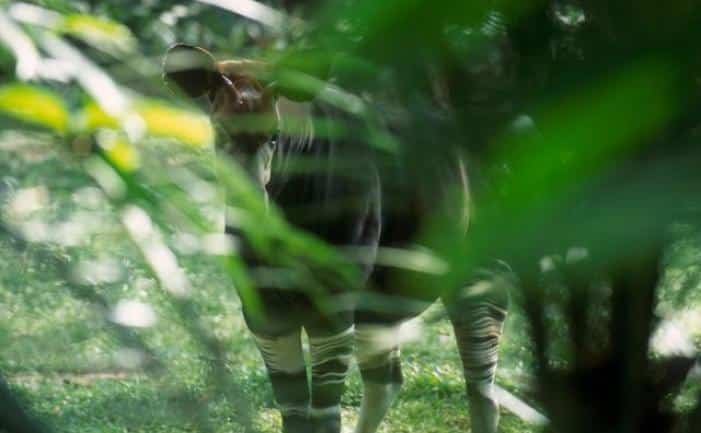
The okapi, also known as the “forest giraffe,” is found only in the rainforests of the Democratic Republic of Congo (DRC), making the species endemic to the region. Characterized by its uniquely striped legs and rump, and elusive personality, the okapi is a close relative to the giraffe. The okapi is considered a flagship species, making each individual’s protection crucial to preserving intact forest habitats, which in turn support countless other species and sustain the rich biodiversity of the Ituri Forest. Largely due to habitat loss, deforestation, and poaching, the okapi’s conservation status on the IUCN Red List is Endangered—making now the time to act decisively to prevent its disappearance from this world.
The Okapi Conservation Project (OCP) is doing just that to ensure this species’ protection. The OCP, a long-standing partner with WCN, recently released their 2024 annual report, highlighting the positive impacts from intertwining community and conservation efforts. One of OCP’s leading initiatives is implementing agroforestry: a land use management system that intentionally integrates trees with crops. Actively promoted in six nurseries across communities in the Congo, agroforestry benefits both communities and wildlife as soil health increases, crop production rises, and less pressure is placed on primary forests. The OCP’s program saw significant gains in 2024, enabling communities to strengthen their food security, generate income, and restore forest landscapes.
Here’s a closer look at what they accomplished:
- Through the establishment of over 800 vegetable gardens, 1,100 households benefited from obtaining fresh produce as well as earning money from market crops. For example, farmers in Biakato earned $160–$450 from market crops like peppers, cabbage, eggplant, and tomatoes.
- OCP distributed farming tools and seeds such as groundnuts, beans, and paddy rice to hundreds of local farmers.
- Along Okapi Wildlife Reserve’s eastern boundary, OCP planted 1,000 Terminalia superba trees, a native hardwood species that plays a critical role in stabilizing soil and restoring degraded forest land.
- Security fences were completed at Mungbere and Wamba, protecting tree nurseries from wildlife and unauthorized access.
- 115,000+ seedlings (nitrogen-fixing, fruit, agroforestry, and multipurpose trees) distributed to over 4,000 farmers.
- A seed storage facility in the Epulu rainforest of the Reserve was upgraded in September 2024, improving seed preservation and management of key crops.
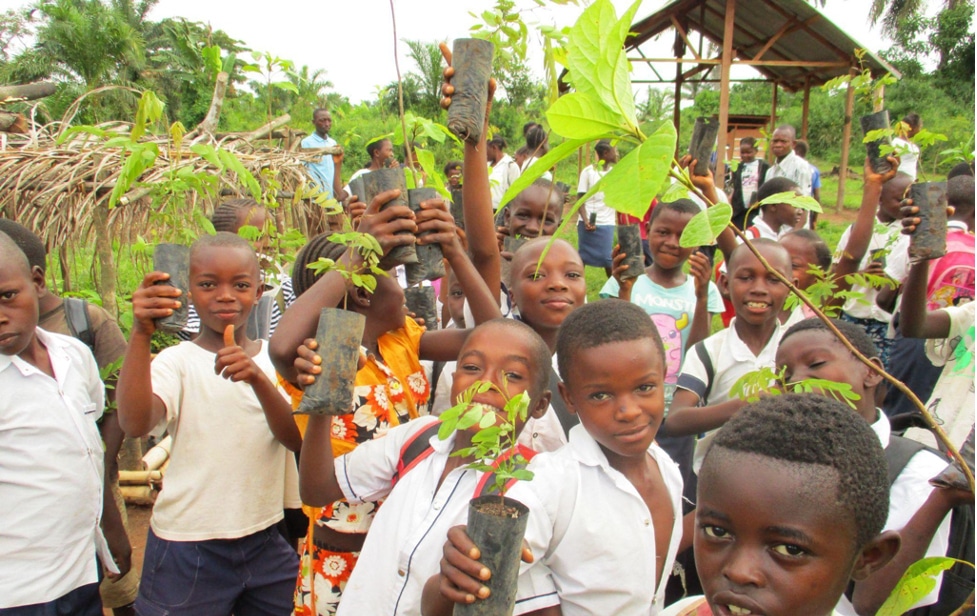
The agroforestry program has proven effective in promoting sustainable agriculture and reducing pressure on primary forest, offering communities viable, long-term alternatives that support both livelihoods and conservation goals. Since 1987, the OCP has led programs like their agroforestry initiative to protect the endangered okapi in the Okapi Wildlife Reserve, while also offering long-term sustainability for surrounding communities. Agroforestry is just one piece of OCP’s holistic conservation strategy, which also includes wildlife monitoring, ranger support, education, and community development.
Read more about OCP’s agroforestry program and their 2024 annual report to explore their valuable work and impactful achievements so far!